In the studio of Berlinde de Bruyckere 2015 (YouTube accessed 21 February 2020)
__________________________________________________________________________________________________________________________

Belinde de Bruyckere
Cripplewood, Venice Biennale 2013
Wood, wax, fabric?

Belinde de Bruyckere

Belinde de Bruyckere
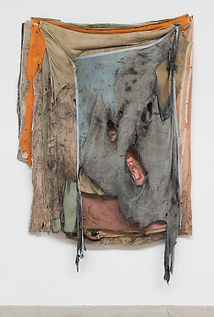
It almost seemed to be a lily IV, 2017
Blankets, (wax, ink?)
Belinde de Bruyckere
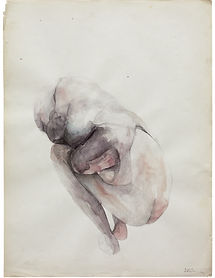
Preparatory drawing
DE-B.jpg)
Belinde de Bruyckere is a Belgian artist who works with wax, animal skins, hair, textiles, metal and wood to create haunting, distorted images of organic forms. She has developed a unique technique of painting with warm wax which involves painstakingly building up translucent layers of colour and re-melting them together in the process of making her sculptures. This gives the works an unworldly luminosity and produces a disturbingly realistic anatomy of skin and bone. De Bruyckere builds her beautiful and fragile sculptural forms by manipulating the wax whilst still warm and malleable, laying the limb-like forms on pillows or supporting them on trestles and then binding them with cloth and twine. By doing so she plays with dualities of love and suffering, danger and protection and of life and death. Her helpless ‘bodies’ have a tenderness about them whilst also provoking feelings of unease making us intensely aware of our own mortality.
In her most recent textile works Courtyard Tales 2017-18, she has moved away from figurative work and created a series of forms from layered weathered blankets. Ragged and tattered, instead of warmth and protection they suggest the lack of these things, linking them to the poverty and deprivation De Bruyckere says she sees around and connecting the works to De Bruyckere’s universal themes of life and death.
Her installation ‘Cripplewood’ was displayed at the Venice Biennale in 2013 and is a huge wax painted tree trunk with its ‘limbs’ bandaged with cloth. It is both impressive and intensely moving, at approximately ten metres long when installed on the gallery floor. Benno Tempel, Director of the Gemeentemuseum Den Haag describes De Bruyckere’s work as containing a degree of spirituality and having layers of meaning, describing Cripplewood he says ‘at first sight it looks like a tree trunk with branches but when you walk around it but when you walk around it a bit longer you’ll start to notice these branches have been wrapped in cloth, for instance. And soon that the image has shifted. It became not just a tree trunk but also a reference to The Raft of Medusa a famous nineteenth century painting of a shipwreck and once I’d seen that I started to see modern day boat refugees. Knowing you’re Belgian I started to see the atrocities of the First World War, with severed limbs. It became a very layered piece which no longer referenced a disguised tree but so much more. To both historical and contemporary art. I often experience such tipping points in your work when you give yourself time to penetrate that first image you’ll see a deeper meaning’1. He sees these permeated layers of meaning as very important to De Bruyckere’s practice and what makes the work timeless.
In my own practice I am currently concerned with abstract representations of the body and the more uncomfortable side of being human, the uneasiness that reminds us of our own mortality. This is why I am fascinated by the way De Bruyckere manages to imbue inanimate objects with humanity in ways that are both tender and challenging. Her work demonstrates the importance of materiality and its symbolism and reminds us that every decision an artist makes about the selection of materials, or how the work is to be displayed, can either reinforces our overall intent or unintentionally unravel it.
1 In the Studio of Berlinde de Bryckere (13 November 2015) https://www.youtube.com/watch?v=ZotDGJONHJM
[Accessed 21 February 2020]