31 January 2020 Helen Frankenthaler, Tate Modern and
Tim Johnson tutorial 5 February 2020
__________________________________________________________________________________________________________________________
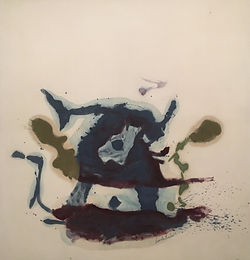
Helen Frankenthaler
Vessel 1961 Tate Collection

Helen Frankenthaler
Detail, Vessel 1961
Tate Collection
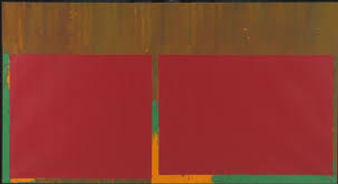
John Hoyland
17.3.69 Tate Collection
It was very interesting to see Helen Frankenthaler’s five large soak-stain paintings at Tate Modern following the discussion of John Hoyland’s work at the The Materiality of Paint session at the Conversations on Painting seminar held on 31 January 2020. John Hoyland used Helen Frankenthaler’s soak-stain technique as a ground for some of his paintings such as 17.3.69.
The five paintings recently hung at Tate are each approximately 1.5m square or more and all use Frankenthaler’s soak-stain technique, thinned oil paint, which was allowed to pool on the raw, un-primed canvas much of which is deliberately left unpainted. The works have an implied movement and energy, they play with the idea of the type of ink blots used in psychological testing. Frankenthaler enjoyed working with the accidental marks this technique produced. Often the colours have a halo of oil around them adding to the sense of movement and brining into play the negative space on the canvas making it as important as the unpainted areas.
Looking at Frankenthaler’s work led to consider how I might be able to use this technique to create a more subtle ground to work on than the fluorescent pink I have been using. I am interested in making something more similar to the distemper I used in December without stiffening the canvas, so I might use the resulting canvas in my soft sculptures. Tim Johnson warned against using pigment directly in linseed oil as without laborious grinding of the pigment into the oil this would be very unstable once dry, Instead he suggested either using commercial paints thinned with 50ml stand oil, 50ml Damar varnish and 120ml pure turpentine or Sansador. He also suggested experimenting with acrylics and recommended speaking to AP Fitzpatrick’s about using Kremer acrylic binder and acrylic pigments that could be thinned with water to the desired consistency. The acrylic stain or ground can then have oil paint applied on top. Tim warned against applying acrylic paint on top of acrylic paint as it is very unstable just as you should never put acrylic paint on rabbit skin glue as the water in it can soften the glue.