From Figuration to Abstraction:
an investigation into trauma and its expression
MA Fine Art: Critical Practice Presentation
January 2020
___________________________________________________________________________________________________________________________________________________________________
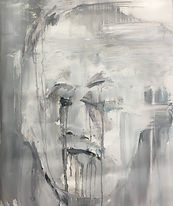
Caroline Ingham Self-portrait
painted with rag, November 2019
Oil on gesso prepared paper
56 x 78cm
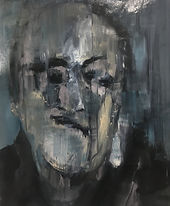
Caroline Ingham Self-portrait
painted with rag, November 2019 Oil on black gesso prepared paper
56 x 78 cm
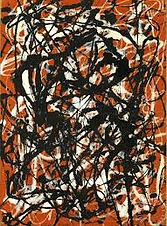
Jackson Pollock Free Form, 1946.
Oil on Canvas, 48.9 x 35.3 cm
Museum of Modern Art, New York

Lee Krasner, Embrace, 1956
Oil on canvas. 162.6 x 144.8 cm
Private Collection
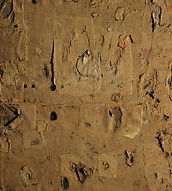
Alberto Burri, Sacco e oro (Sackcloth and gold), 1953. Burlap and gold on canvas 126 x 117cm Fondazione Palazzo Albizzini Collezione
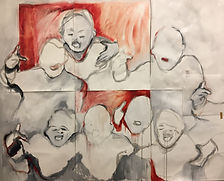
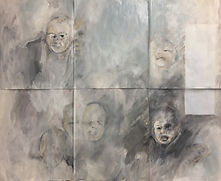
Caroline Ingham Syrian Boy,
October 2019. Oil and ink on gesso prepared paper, 168 x 136 cm
Caroline Ingham Wiped Out (Syrian Boy), November 2019. Oil on gesso
prepared paper, 168 x 136 cm
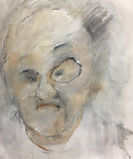
Caroline Ingham Self-portrait with eye removed
December 2019
Oil on gesso prepared paper
56 x 78cm
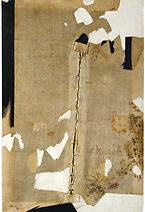
Alberto Burri, Lo strappo (The
Rip), 1952. Oil, fabric, thread,
pumice and Vinavil 87 x 58 cm
Collezione Beatrice Monti
della Corte

Lee Krasner, The Eye is the First Circle, 1960 Oil on canvas 235.6 x 487.4 cm
Private Collection
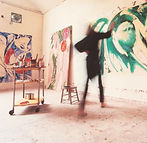
Lee Krasner painting
Portrait in Green
in her studio in the 1960s
Photograph: Mark Patiky
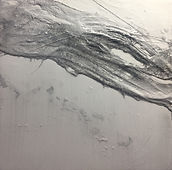
Caroline Ingham Distressed 10.II
30 December 2019
Plaster bandage, graphite powder
and clear gesso on board
20 x 20 cm
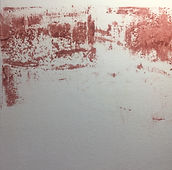
Caroline Ingham Distressed 14.II
30 December 2019
Sheet and distemper on board
20 x 20 cm

Caroline Ingham Distressed 4.I
30 December 2019
Plaster bandage on canvas board
20 x 20 cm
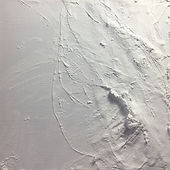
Caroline Ingham Distressed 9.II
30 December 2019
Plaster bandage, distemper and clear gesso on board
20 x 20 cm
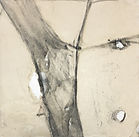
Caroline Ingham Sinew
7 December 2019
Bandage, newsprint, PVA and
graphite on canvas board
20 x 20 cm
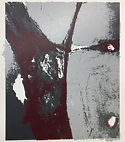
Caroline Ingham Sinew
December 2019
Screen print on paper
20 x 20 cm
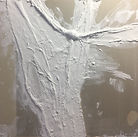
Caroline Ingham Distressed 8.II, in progress. 9 December 2019 Screen print and plaster bandage, PVA seal on board 20 x 20 cm
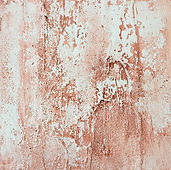

Caroline Ingham Distressed 2.1
30 December 2019
Plaster bandage and distemper
on board 20 x 20 cm
Caroline Ingham Distressed 1.I
30 December 2019
Plaster bandage and distemper
on board 20 x 20 cm
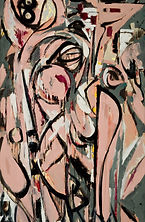
Lee Krasner, Birth, 1956
Oil on canvas
210.8 x 121.9 cm
Reynolda House
Museum of American Art

Caroline Ingham Self-portrait
October 2019. Oil on
gesso prepared paper
56 x 78 cm
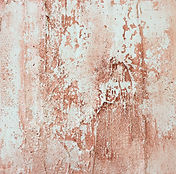
Caroline Ingham Distressed 2.I
(work in progress) December 2019
Plaster bandage and distemper on
board, 20 x 20 cm
Please click on the link to access my
Critical Practice Powerpoint Presentation.
The 1000 word 'script' is contained in the 'Notes' of the Powerpoint (as well as below), view Notes Page once the presentation is open. At the end of the presentation are two final pages of References and the Bibliography.
Script of Cross Pathway Symposium Presentation
Slide 1 From Figuration to Abstraction: an investigation into trauma and its expression
Slide 2
In 1956 just weeks after the sudden death and funeral of Jackson Pollock, Lee Krasner made some of her most extraordinary works ‘Birth’, ‘Embrace’ and ‘Three in Two’.
When asked about her determination to work, even in the face of such profound grief, Krasner was matter-of-fact (Rago, L, E, 1960):
’Painting is not separate from life. It is one.
It is like asking – do I want to live? My
answer is yes – and I paint.’1
1 Lee Krasner, quoted in Louise Elliott Rago, ‘We Interview Lee Krasner’ School Art, 60, September 1960, p. 32
Slide 3 From Figuration to Abstraction:
an investigation into trauma
My project is an investigation into trauma and its expression through self-portraiture.
In this presentation I will explain how my work has moved from figurative to abstract.
Key to this have been
- The work of the Abstract Expressionists and the connection between gesture and subject
-The significance of the Second World War to mid-twentieth century artists and the psychology of trauma
-Experimentation and the question of figuration in my practice
-The work of Lee Krasner and Alberto Burri and the abstract expression of trauma
-
-The result of my research and the experimentation I have undertaken in my own practice is a dramatic shift in direction in my work from – figurative, Self-portrait, left - to abstract (left), Distressed 2.1 (right), a current work in progress
Slide 4 Gesture and subject and the work of the Abstract Expressionists
-I began by considering the effectiveness of my mark-making in the expression of trauma.
-I did this by undertaking a number of experiments, painting self-portraits with rags, scrunched up newspaper, steel wool and other materials, as shown in these two examples.
-Gesture has always been important to my practice but through this experimentation I became conscious of how the mark I was making could influence what I was trying to express.
-
-This led me to consider the role of gesture and mark-making in the work of the Abstract Expressionists.
Slide 5 The significance of the Second World War to mid-twentieth century artists and the psychology of trauma
-The psychological impact of the Second World War on mid-twentieth century artists became clear as I researched the psychology of trauma in parallel with the work of the Abstract Expressionists.
-Mary Gabriel (2018) explains in the introductory chapters of Ninth Street Women, how the combined ‘traumas’ of the legacy of the Depression, the experience of the Second World War compounded by revelations of the true horrors of the Holocaust and the looming threat of the atomic bomb, were all factors that prompted the Abstract Expressionists to turn away from the material world and instead to an expression of their inner selves.
-This is summarised by Gino Severini in his book The Artist in Society published just after the war in 1946, a book which would have been familiar to Abstraction Expressionists
- It cannot even be said that peace has come after the war…or toleration after hatred. Few are the people nowadays who have faith in their fellow-men…will and superficiality are so widespread in the world that disbelief in men seems almost justified, and the truth is so twisted by private interests that one can hardly believe in Truth itself anymore…
We need, therefore, to go deep down into ourselves, into the depths of our subjectivity, so as to search for a Truth that can revivify and strengthen our certainty that life is useful, beautiful and eternal. 2 Gino Severini 1946 The Artist and Society
2 Gino Severini, (1946) The Artist and Society, London The Harvill Press p.74
Slide 6
-The trauma of the Second World War was a significant influence on both sides of the Atlantic.
-The search for an inner truth prompted by the lack of belief in a projected future, turned artists away from the material world and towards the subjective emotional expression evident in both Lee Krasner’s expressive paintwork (left) and Alberto Burri’s ‘traumatised’ supports (right).
-Michelle Crossley’s (2000) article, ‘Narrative psychology, trauma and the study of self/identity’, helps explain why the Second World War had such an impact.
-In the article she describes the psychological tools we require to make sense of and navigate our lives.
-The most important is ‘storytelling’ which, gives us our self/identity and, the sense of a meaningful life. It enables us she says, to use the present to link to our past and project into our future.
-Trauma such as receiving the diagnosis of a life-threatening illness, disrupts this and the most basic existential assumptions we hold about ourselves and the world: shocking us out of our complacency about the assumed futurity of our existence and undermining all our effort and sacrifices directed towards a future which isn’t going to happen.
Slide 7 Exploring the psychology of trauma
-Reflecting on the psychology of trauma and the work of the Abstract Expressionists I re-examined the expression of trauma in my own work.
-I returned to the painting ‘Syrian Boy’ (left) and decided to try and re-work it with the aim of creating a more meaningful expression of trauma.
-Rubbing away at the surface with steel wool and sand paper and re-painting it using rags and scrunched up newspaper, this eventually resulted in the painting, ‘Wiped Out’ (Syrian Boy), right.
Slide 8 Experimentation and the question of figuration in my practice
-The erosion of surface of the painting Wiped Out (Syrian Boy), eventually led me to make more dramatic interventions and begin to physically remove parts of the support itself.
-See Self-portrait with Eye Removed.
-This led me to examine to the work of Alberto Burri.
Slide 9 The work of Alberto Burri and Lee Krasner and the abstract expression of trauma
-Burri a medic with the Italian army, began to make his distinctive canvases using the materials available to him, whilst being held as a Prisoner of War in the United States, during the Second World War (J Hamilton, 2008).
-Stitching together, burlap and bandages - Burri’s treatment of the support, is widely interpreted to have resulted from his experiences in the Second World War, as described by the contemporary critic Lorenza Trucchi (1952), on first seeing his Sacchi series exhibited 1952
“membranes” upon which “sensuality and nihilism are fused to the point of becoming a confusion of sensations, con-flicts, [and] nightmares.”3
-Trucchi implies that the surface of the canvas acted as a skin of traumatic memory that was surely related to the recently ended war.
-Burri’s destructive treatment of the support became a characteristic of his work as well as Arte Informale, a movement which developed in post-War Europe, in parallel to Abstract Expressionism in the United States.
-3 Lorenza Trucchi, “Dal casto omiccioli all’alchimia di Burri,” Il Momento (January 18, 1952), n.p.
Slide 10
-Arte Informale and the Abstract Expressionists and were prompted by global events to experiment with new ways of subjective emotional expression.
-In the work of Burri and Krasner we can see this resulted in two very personal expressions of trauma.
-Re-examining Lee Krasner: Living Colour the exhibition at the Barbican last year (E, Nairne, 2019) in the light of my research, made apparent to me the narrative of personal trauma in her work.
-Suffering the shock of Jackson Pollock’s sudden death in 1956, followed by her mother’s 1959, Lee Krasner went through a period of acute insomnia.
-Working through the night to produce the huge paintings of her Umber series, such as ‘The Eye is the First Circle’ 1960.
-In this and other works in the series, Krasner’s personal trauma is expressed through the nature of her mark-making, the physicality of the paint, the scale of the work and the energy we are aware she expended in order to make the painting.
See the image, of Lee Krasner working in her studio in the 1960s.
-The power of Krasner’s abstract expression of trauma together with my research into the work of Alberto Burri, prompted me to question the expression of trauma through figuration in my own work.
Slide 11 Towards the abstract expression of trauma in my practice
-This eventually led me to abandon figuration and begin a series of more radical experiments into the abstract expression of trauma through gesture and the physical treatment of the support.
-The treatment of the support has now become paramount.
-My experimentation has extended beyond mark-making to include trialling new materials and techniques such as using sheets, distemper and PVA to create a surface to paint on, as shown in these four examples.
Slide 12
-Consequently and most recently, I have made dozens of different types of support.
-From one of these I created a series of screen prints in mid-December, see centre image.
-I have begun to amalgamate some of these prints with the distressed supports, see example on the far right.
Slide 13 From Figuration to Abstraction: an investigation into trauma
-The most successful of these experimental supports to date are those that include a layer of distemper, as shown here.
-Though by no means resolved this feels like a radical and exciting shift in my work.
-In the next few months I intend to continue working with the distressed supports experimenting further, by painting with oils on the resulting surface and adding to the layers of ‘collage’.
-
-I will continue to research the work of Lee Krasner and Alberto Burri but also intend to investigate the importance of ‘series’ to my practice.
-Specifically by undertaking an investigation into Aby Warburg’s Mnemosyne Atlas, in order to develop a critical understanding of the importance of juxtaposition to interpretation.
-
-Finally I will leave you with another quote from Lee Krasner
’ Painting... in which the inner and the outer man are inseparable, transcends technique, transcends subject and moves into the realm of the inevitable.’ 4
Lee Krasner (B, H Friedman, B, Robertson, 1965)
4 Lee Krasner, "Statement" in Bryan Robertson and B.H. Friedman, Lee Krasner: Paintings, Drawings, and Collages (London: Whitechapel Art Gallery, 1965).
References
Crossley, M. L. (2000) Narrative psychology, trauma and the study of self/identity Theory & Psychology. Available from: https://journals.sagepub.com/doi/abs/10.1177/0959354300104005 [Accessed 31 October 2019]
Friedman, B, H, Robertson, B. (1965) Lee Krasner: Paintings, Drawings, and Collages London. Whitechapel Art Gallery n.p Lee Krasner ‘Statement’
Gabriel, M. (2018) Ninth Street Women Lee Krasner, Elaine de Kooning, Grace Hartigan, Joan Mitchell and Helen Frankenthaler: Five Painters and the Movement That Changed Modern Art, New York: Little Brown and Company
Hamilton, J. (2008) Making Art Matter: Alberto Burri’s Sacchi. The MIT Press Journals Available from: https://doi.org/10.1162/octo.2008.124.1.31 pp. 31–52 [Accessed 8th December 2019]
Nairne, E (ed.) (2019) Lee Krasner: Living Colour London. Thames and Hudson
Rago, L, E. (1960) ‘We Interview Lee Krasner’ School Art 60 p 32
Severini, G. (1946) The Artist and Society, London The Harvill Press p.74
Trucchi, L. (1952) “Dal casto omiccioli all’alchimia di Burri,” Il Momento n.p.
Bibliography
Borzello, F. (1998, expanded edition 2016) Seeing Ourselves, Women’s Self Portraits, London: Thames and Hudson Limited
Durranti, M. (2012) Alberto Burri : Form and Matter, Perugia Italy: Dimensione Grafica [Accessed 8 December 2019]
Elkins, J. (1999) What Painting Is: how to think about oil paint using the language of alchemy New York: Routledge
Freud, S. (in translation a modified version of the one published in 1924 vol 12 Standard Edition 1950) Remembering, repeating and working through, Further Recommendations in the Technique of Psychoanalysis II: Recollection, Repetition and Working-Through London [Accessed 27 November 2019]
Ingrams, C. (2019) ‘A Kind of Fissure’: Forma (1947-1949) UCL Discovery Available from: DOI:10.14324/111.2396-9008.034 [Accessed 8 December 2019]
N, Kurchanova. (2015) Alberto Burri: The Trauma of Painting Studio International Available from:
https://www.studiointernational.com/index.php/alberto-burri-the-trauma-of-painting-review-guggenheim-museum [Accessed 8 December 2019]
Levin, G. (2019) Lee Krasner: A Biography USA William Morrow and imprint of HarperCollins
McKever, R. (2015) Surface tension. Apollo, Sept. 2015, p. 64+. Gale Academic Onefile Available from: https://go.galegroup.com/ps/anonymous?id=GALE%7CA431082282 [Accessed 8 December 2019]
Pollock, G (2007) Encounters in the Virtual Feminist Museum: Time, Space and the Archive Abingdon UK : Routledge
Sontag, S. (2003) Regarding the Pain of Others United States of America Farrar, Straus and Giroux