Our Bodies Ourselves
on women, health and illness
Exhibition Proposal, Unit 3
__________________________________________________________________________________________________________________________________________________________________
An exhibition presented through artworks and performed prose
at
The Old Operating Theatre Museum & Herb Garret
St Thomas Street London
____________________________________________________________
A PDF version of the following Exhibition Proposal can
be found at the bottom of this page
_____________________________________________________________
The venue selection

Entrance to The Old Operating Theatre
Museum and Herb Garret via St Thomas’
church tower on St Thomas Street adjacent to London BridgeStation and the Shard
The exhibition
-
The title of my exhibition is
Our Bodies Ourselves: on women, health and illness
-
My ambition for the exhibition is that there should be an element of performance to the presentation of my work: the details of this are explained later in this document together with my reasons for selecting this specific venue and how it might accommodate the performance.
The venue
-
The venue I have selected for the exhibition is The Old Operating Theatre Museum and Herb Garret, on St Thomas Street, opposite Guy’s Hospital, adjacent to the Shard and London Bridge station.
-
The Old Operating Theatre has been housed in the Herb Garret over St Thomas’ church since 1822 and is the oldest surviving surgical theatre in the Europe. The church was part of the original St Thomas’s Hospital that was moved to the south side of Westminster Bridge in 1862 when the viaduct between Charing Cross and London Bridge station was developed.
Observational drawing, 2020
Seventeenth century anatomy table
Royal College of Physicians
Artist Statement

My work explores our relationship with our bodies specifically at times of ‘bodily doubt’ and vulnerability. I am curious about how we construct personal narratives to enable us to navigate experiences of trauma and illness and how the value of these stories is beginning to be recognised through the relatively new discipline of ‘narrative medicine’; a medical approach that utilises people's narratives in clinical practice, research and education as a way to promote healing. These ideas manifest in my practice as a concern with combining the narratives we form around our bodies, illness and trauma with a sense of what it is to be human.
I often use historic medical collections as primary research material, imagery I assimilate through observational drawings. Doing this gives me a deep sense of connection with the people whose remains I am drawing, the vast majority of whom are anonymous.
My work is a series of three dimensional assemblages created using a palette of hand-dyed textiles and distemper impregnated canvas. These are brought together into sculptural forms using ‘free sewing’ where I incorporate strips of textile, string and latex into the stitched line as I am making, which mimics the gestural mark-making that characterises my drawing and painting. The properties of the materials dictate the initial shape of the work which is then exaggerated or augmented by stuffing, wiring and painting with wax or more distemper. The resulting ‘bodies’ hang, slump or sit weighted by the addition of cast plaster forms. Light is used to activate the translucent properties of the wax and sheer textiles, adding to a sense of the corporeal.
The aim of my work is to engender ideas through sensation,
perceptions about what it is to be human and to live in a mortal
body in a precarious world.

Fissure, 2020, detail
Soak-stain and hand dyed textiles,
wax and wire
Works selected for exhibition
Perceptual Shift: a series of four works Portal, Schism, Husk and Fissure
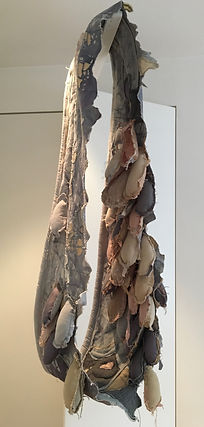
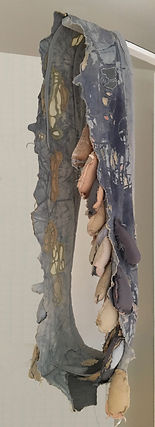

1 Portal, 2020
Left, two views and above, detail
143 x 49 x 43 cm
Soak-stain and hand dyed textiles,
wax and wire


2 Schism, 2020
Left, two views and above, detail
192 x 60 x 59 cm
Distemper impregnated, soak-stain and hand dyed textiles, wax and wire


3 Husk, 2020
Far left and left, detail
47 x 54 x 47 cm
Distemper impregnated, soak-stain and
hand dyed textiles, wax and wire


4 Fissure, 2020
Left and far left, detail
178 x 48 x 31 cm
Soak-stain and hand dyed textiles,
wax and wire
Research and context informing my practice

Berlinde de Bruyckere
Eén, 2003-2004
Discomfort in need of diagnosis forms a feeling-scape of curious pains and corporeal eruptions, all untamed by the category ‘disease’. The kind of illness that has no name is the kind that is held in suspense or held in common or shuffled into the adjacency of psychiatry.
(Anne Boyer ‘The Undying’ 2019)
My research is focused around several key themes:
-
The construction of personal narratives that enable us to navigate experiences of trauma and illness.
-
Women artists whose practices are concerned with the body at times of trauma, illness and vulnerability. Key artists I have been researching; Helen Chadwick, Berlinde de Bruyckere, Jesse Darling, Jo Spence, Hannah Wilke, Doris Salcedo, Eva Hesse and Alina Szapocznikow.
-
Materiality and engendering ideas through sensation.
-
Alternative perspectives on illness and healthcare, specifically women’s perspectives. Key authors I have been reading; Sinéad Gleeson, Anne Boyer, Johanna Hedva, Bessel van der Kolk Arthur W Frank and Audre Lorde.
Exhibition venue selection

View of the ‘performance’ area, The Old Operating, from the visitor’s entrance
The Old Operating Theatre Museum and Herb Garret, St Thomas Street London

The central operating table as seen from the viewing
tiers at The Old Operating Theatre
-
The venue I have selected for the exhibition of Perceptual Shift is an operating theatre built in 1822 specifically for female patients.
-
During this period medical students learnt how to carry out operations by watching more experienced doctors perform them in ‘theatres’ like this. The students stood on the tiers and leant over the rails so they could see the patient on the central operating table.
-
The ‘performance’ was lit from a skylight positioned above the operating table, and later gas lighting: the fixture for this still hangs from the ceiling.
-
At the time the operating theatre was built there were almost no female doctors so the only women to make an appearance here would have been patients, brought in from the adjacent women’s ward.
-
The building resonates with the themes of my practice, women’s experience of illness, the history of science and personal narrative.
-
It is a small and intimate viewing space that suits the scale of my work.
The Old Operating Theatre as performance space
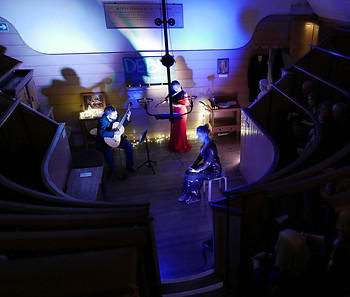
DEBUT, a performance at the Old Operating Theatre
February 2019
-
The Old Operating Theatre Museum hosts a program of bookable evening events, performances that usually explore themes of
-
To my knowledge Our Bodies Ourselves will be the first time the Museum has hosted a contemporary art exhibition.
-
In the evening the lighting at the venue can be controlled and the sound is good (musicians are often part of the performances).
-
The initial viewing of my work will be a managed performance: each piece will be shown sequentially spot lit in turn.
-
The selected work will remain illuminated for the duration of a piece of performed prose and then the next piece will be lit.
-
The prose will be selected extracts from my research texts, ideally performed by the authors themselves, for example Sinéad Gleeson reading from ‘Constellations’ and Anne Boyer from ‘The Undying’ (listen to embedded audio clip).
-
During the ‘performance’ the general lighting in the auditorium will be low; following the ‘performance’ the lighting will go up and the audience will be free to wander amongst the sculptures on the ‘stage’ and examine them in detail.
Lighting and performance, inspiration images
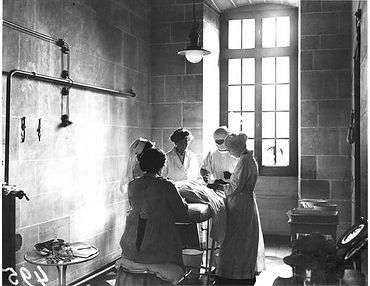

Above two historic images of operating theatres showing
top lighting focussed on the patient
-
During the ‘performance’ the spotlighting of the work will mimic the type of lighting used in operating theatres, focused on the patient (in this case the work) and directed from above.
-
I am interested in the peering nature of looking at ‘the patient’ this evokes.
Visualisation One: The size of the space
Tiered
standing
area
Tiered
standing
area
-
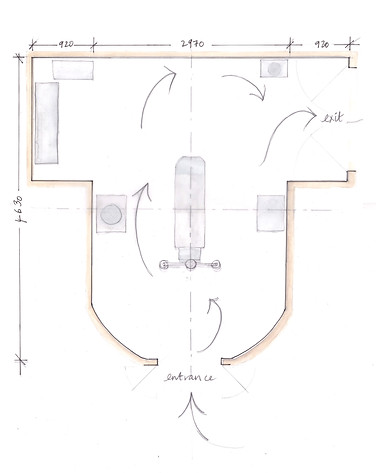
I visited the Old Operating Theatre Museum on 8 August 2020 having obtained permission to measure and photograph the space.
-
The space is small and intimate, just under 17 square meters which is suitable for installing the four pieces of work in Perceptual Shift.
-
On a 1:20 scale plan, drawn up from the measurements I took on site I placed scale images of the works to check they would fit where I wanted to place and that there would be enough circulation space for visitors to comfortably move around Schism, Portal and Husk on ‘stage’ once the ‘performance’ is finished.
-
Fissure will be displayed at the top of the steps leading into the operating theatre, for visitors to view as they enter for the ‘performance’.
-
The advice from the venue is that 60 people (including staff) could attend each event pre-COVID currently this is reduced to 26 (including staff) to be COVID-safe.
1:20 Scale Plan of the Old Operating Theatre ‘performance space’
approximately 17 square meters
Visualisation Two: Exhibition Layout

Our Bodies Ourselves proposed exhibition layout
The Old Operating Theatre
1:20 Plan
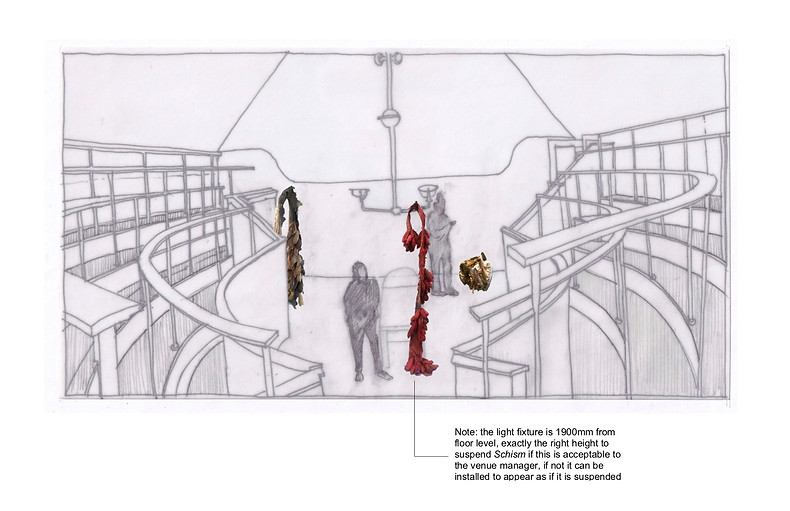
Visualisation Three: Exhibition Sketch Elevation
Our Bodies Ourselves sketch elevation of the exhibition showing the objects and
visitors to scale in The Old Operating Theatre ‘stage’ area
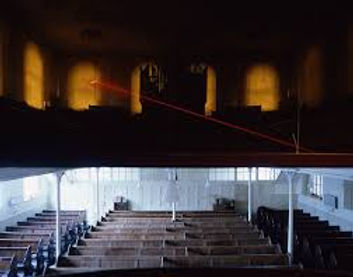
Presentation reference image one: an artist’s work interacting with the original purpose of a building
-
The first three of my reference images show examples of exhibitions presented in venues that either reinforce the themes of their content or where the collection and the exhibition themes interact.
-
The first image is of Helen Chadwick’s Blood Hyphen, 1989 installed at the Clerkenwell and Islington Medical Mission. It is a site-specific work that resonates with the building’s original Christian and medical purpose.
-
Oliver Bennett described it in the ‘New Art Examiner’
Blood Hyphen explored this artist’s relationship to religion and femininity… A red laser beam, representing the link (or ‘hyphen’) between the blood of Christ and procreation, shone from a crescent in the wall, cutting through the top bit of the chapel, to land in a photograph of cells, referring to high-tech healing processes for cervical cancer. In the darkened interior of the chapel, it had a similar beatific radiance to stained glass and a feeling of erotic abstraction that would have delighted St Teresa of Avila
(Bennet 1989, quoted in, Arts Catalyst,1996)
Helen Chadwick Blood Hyphen, 1989. Helium neon laser and assorted media
Installation in chapel vault Clerkenwell and Islington Medical Mission
Presentation reference image two: an artist’s work displayed at a venue that adds context to their work

Ida Applebroog: Mercy Hospital drawing series
Installed at the Freud Museum, London 2020
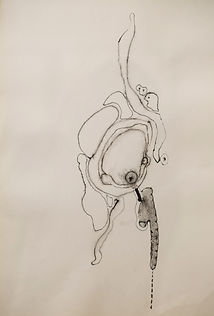
Ida Applebroog, drawing made while under psychiatric care at Mercy Hospital
-
Ida Applebroog's Mercy Hospital drawings were made while the artist was in psychiatric care following a nervous breakdown in the 1960s and her physician suggested she draw instead of receiving electric shock treatment.
-
The series of drawings she produced were installed at the Freud Museum earlier this year, where they had an obvious connection with the collection and Freud’s work using psychoanalysis as a method for treating mental illness.
Presentation reference image three: exhibition installed at an institution with
a stated purpose that resonates with the work
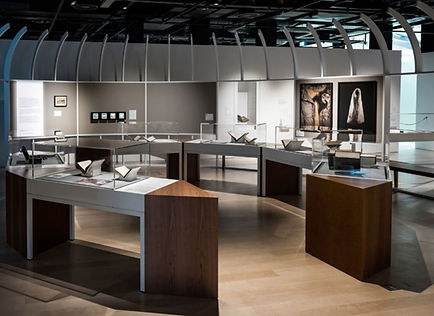
Wellcome Collection is a free museum and library that aims to challenge how we all think and feel about health. Through exhibitions, collections, live programming, digital, broadcast and publishing, we create opportunities for people to think deeply about the connections between science, medicine, life and art.
(Wellcome Collection 2017, mission statement)
-
Bedlam: the Asylum and Beyond was an exhibition at the Wellcome Collection that provoked questions and explored attitudes to mental health past and present through objects relating to the original Bethlam Hospital alongside works by contemporary artists.
-
The display of contemporary art to explore attitudes to health is an objective captured in the Wellcome Collection’s mission statement.
Bedlam: The Asylum and Beyond
Installation view at Wellcome Collection
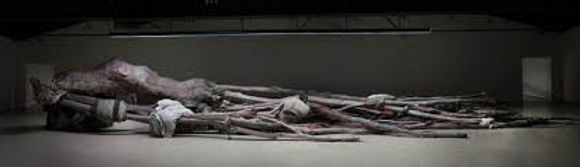
Presentation reference image four: atmosphere created through lighting
-
This reference image shows how lighting can be used to influence visitor behaviour, evoke atmosphere and reinforce concepts engendered by an artist’s work.
-
Berlinde de Bruyckere’s Cripplewood at the 2013 Venice Biennale was displayed in a dimly lit gallery. This encouraged visitors to spend time slowly discovering the work and to contemplate the layers of meaning held in it, ideas of the abject, pain and vulnerability.
Berlinde De Bruyckere, Cripplewood, 2012 – 2013. InstallationVenice Biennale
Wax, epoxy, iron, paint, wood, fabric, rope, gypsum, roofing
Photo: Mirjam Devriendt © Berlinde De Bruyckere
Proposed mounting for Perceptual Shift

Installation fixings for the works
-
Fissure, Schism and Portal will be installed and secured in The Old Operating Theatre using stitched fabric loops or ‘ribbons’, attached to the works and made from the same materials as the works themselves. These will be fastened directly to fixtures in the space if it is permitted; or suspended using metal hooks such as the one shown on the right. The hooks could be lined with polyethylene foam to protect the surface they are hooked over if required by the venue manager.
-
Husk sits directly on the floor and requires no fixing.
Detail of ‘ribbon’ fixing and hook used to install Fissure
Presentation reference image five: exhibition layout reinforcing themes of work

Christine Borland Bison Bison 1997
Lisson Gallery, London

Christine Borland Bison Bison 1997, detail
(Image quality apology: unfortunately there is no
photograph available of this view of the work from picture
librariesor online without ‘Getty images’ printed across it)
-
This final presentation reference image demonstrates how the way an artwork is arranged or laid out can reinforce the themes of a work.
-
The image shows Christine Borland Bison Bison, 1997 displayed at the Lisson Gallery. The way it is carefully arranged on white trestle tables is suggestive of medicine, forensics or archaeological finds: objects presented to reveal information through careful examination or scrutiny.
Proposed internal lighting of Perceptual Shift


Images showing the effect of internal LED lighting, left to right
Portal, Fissure and Husk
Internal lighting
-
Portal, Fissure and Husk will be internally lit using LED lighting both during the ‘performance’ and after it, when visitors are invited to wander among the works in the ‘stage’ area.
-
This represents no fire hazard, an important consideration in a historic space.
-
The LEDs will be run from long life batteries, secured in stitched pockets inside each work. The life of the batteries can be estimated, and spares provided if they need to be changed during the exhibition run.
Conclusion: challenges to be addressed

Entrance to the spiral staircase
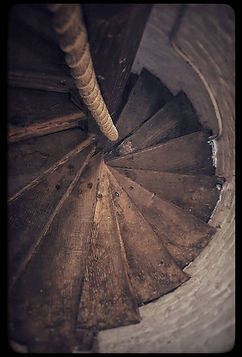
The spiral staircase: there are 52 stepsto the entrance of the Old Operating Theatre Museum and
Herb Garret
There are two key challenges to using this venue for the exhibition Our Bodies Ourselves: the access to the space and the venue not being perceived as one for the display of contemporary art. Here are my suggestions for addressing these issues:
Access
-
Sadly, the access to the venue is very difficult, it is via a 52-step narrow spiral staircase and this would be unacceptable as key themes in my work are vulnerability and illness. A couple of possible solutions to this would be 1) Install a lift (this is a hypothetical proposition!) or 2) To make a film of the ‘performance’ in the space which could then be shown elsewhere, see Postscript two.
The venue as a contemporary art space
-
The venue is not known as a contemporary art space and getting it recognized as such would need effective publicity to promote it as one.
-
Three ideas for overcoming this are 1) The unusual and uniqueness of the space could be used to promote the exhibition 2) It could be publicized together with another event such as ‘Open House’ in September, an annual London wide event that opens up unusual and usually unseen architectural spaces to the public. 3) Making the event bookable could be a selling point, used to promote the exhibition as a limited opportunity.
Postscript 1:1 An alternative ‘white cube’ venue for the display of Perceptual Shift
Bo-Lee Gallery Peckham
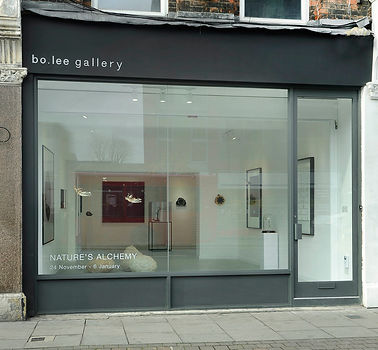
Following the presentation of my exhibition proposal on 13 August 2020, I was asked if I had considered the life of my sculptures beyond a presentation of them at The Old Operating Theatre. I have followed this comment up by adding a couple of alternative presentations of my work in brief postscripts to my main proposal.
-
To ensure visitors have an intimate viewing experience of Perceptual Shift, I have selected Bo-Lee Gallery a small ‘white cube’ space in Peckham, as an alternative exhibition venue.
-
Bo-Lee is currently closed to visitors due to the pandemic so I have not been able to ascertain the exact dimensions of the space but I have been able to estimate its size as I am already familiar with it from previous visits.
-
I am suggesting this alternative hypothetical exhibition proposal be a collaboration between myself and Jesses Darling.
-
I do not think my work or Jesse Darling’s is the type Bo-Lee are interested in exhibiting, the venue selection is based solely on its size and clean contemporary aesthetic.
The façade of Bo-Lee Gallery, Rye Lane, Peckham, London
Postscript 1:2 - Bo-Lee Gallery Peckham a collaboration with Jesse Darling

Caroline Ingham Portal, 2020
143 x 49 x 43 cm
Soak-stain and hand dyed textiles, wax and wire

Jesse Darling, Comfort Station, 2017
78 x 140 x 85 cm
Steel, aluminium, rubber and lacquer
(Chapter NY, 2018)
-
Having recently researched the practice of Jesse Darling for my Critical Practice essay I am interested in the theme of vulnerability that runs through both our practices. Darling’s work prompts us to consider not only the vulnerability of our bodies but the precariousness of all things that are fundamentally fallible and fungible: living beings, societies and technologies.
-
I suggest that the work they show should be a series of modified mobility aids called Support Level.
-
Presenting Perceptual Shift and Support Level together sets up an interesting dialogue between the works which are two very different expressions of bodily struggle. When viewed in a ‘white cube’ space’ the contrasting aesthetics can clearly be seen, uninterrupted by complex architecture or a contextualising collection.
-
I suggest there is no performed prose that would interrupt the visual experience. However there could be a program of events around the exhibition that might include one of the previously selected authors, Sinéad Gleeson who has written an article about Jesse Darling’s practice in Frieze magazine September 2020.
Postscript 1:3 - Selected works for collaborative exhibition between
Jesse Darling and Caroline Ingham at Bo-Lee Gallery

Postscript 1:4 - Visualisation of collaborative exhibition at Bo-Lee Gallery

Perceptual Shift and Support Level sketch elevation of the collaborative exhibition showing
the objects to scale and visitors at Bo-Lee Gallery
Postscript 2:1 – A film of Our Bodies Ourselves ‘performed’ at The Old Operating Theatre

Reference image. Film still, The Quay Brothers The Phantom Museum, 2003. Made for inclusion in the exhibition on Henry Wellcome at the British Museum 2003.
Sir Henry Wellcome (1853–1936) amassed one of the world’s largest museum collections ever to capture human culture and history through medical eyes. The Phantom Museum uses animation to ‘document’ imaginatively this extraordinary assemblage and simultaneously reveal an extremely beautiful yet odd inner
cosmos of things.
(Animate Projects Limited, 2020)
The Old Operating Theatre’s architecture and wooden furniture conceptualise the body providing a powerful interaction with the works in the series Perceptual Shift. To ensure this presentation of the work and this very specific interaction of the works with the space could have a life beyond a limited number of booked ‘performances’ a film could be made of the performance.
Making a film of Our Bodies Ourselves at The Old Operating Theatre offers a number of opportunities and advantages:
-
It overcomes the problem of the difficult physical access to the space.
-
Filming the ‘performance’ offers the opportunity for me to take editorial control of the viewing of the work in relation to the performed prose, which could add significantly to the narrative around the work.
-
The film need not preclude having a limited run of bookable ‘performances’ of Our Bodies Ourselves; ideally there would be both.
-
The film would be a legacy of the ‘performance’ that could be shown in other venues.
-
If it is not possible to arrange a run of bookable ‘performances’ of Our Bodies Ourselves at The Old Operating Theatre making a film at the venue of the ‘performance’ is a realistic alternative.
Postscript 2:2 – Filming Our Bodies Ourselves at The Old Operating Theatre

Exit door from The Old Operating Theatre (Ingham, 2020)
I have been in touch with Sarah Corn, Director of The Old Operating Theatre, about access to
the space for ‘performance’ and filming.
-
It is possible to book the space for filming outside visitor hours either first thing in the morning 8.00 – 10.00 am or in the evening 5.30 – 9.00 pm. An evening slot would be preferrable for shooting Our Bodies Ourselves because it would allow more time for set up and filming and the lighting can be controlled more effectively as it would be dark outside on a winter evening.
-
I would have to raise funds for the hire cost which would be £200.00 an hour, a total of £700.00 for one evening, plus lighting and whatever other equipment or people I would have to hire, such as an actor to speak the selected prose.
-
Permission would need to be sought from the authors for use of the selected prose or an alternative found.
-
There are restrictions placed on the use of the space:
Please note, we are first and foremost a Museum, and as such, we may not be able to accommodate all projects or requests due to the nature of the space itself, conservation requirements, as well as the necessity for projects to align with our organisation’s mission values.
(The Old Operating Theatre, 2020)
-
The lighting and installation of the works would have to comply with these restrictions; however, I am confident with consultation, planning and my own professional experience of installing exhibitions in Grade I listed buildings (British Museum and Natural History Museum) these could be overcome.
References
___________________________________________________________________________________________________________________________________________________________________
Arts Catalyst Projects by Helen Chadwick (1996) Arts Catalyst
Available at: https://www.artscatalyst.org/artist/helen-chadwick
(Accessed: 7 August 2020)
Boyer, A. (2019) The Undying: A Meditation on Modern Illness. London. Penguin Books
Gleeson, S. (2019) Constellations Reflections from Life. London. Picador [prose recording on WIX]
The Old Operating Theatre Museum and Herb Garret. (2020) Photoshoots and Location Filming.
Available at: https://oldoperatingtheatre.com/venue-hire/photoshoots-location-filming
(Accessed: 8 August 2020)
The Phantom Museum (2003) Directed by The Quay Brothers
Available at: http://animateprojectsarchive.org/films/by_date/2002_2004/phantom_museum
(Accessed: 10 September 2020)
Wellcome Collection (2017) Wellcome Collection: Who we are and what we do Available at: https://wellcomecollection.org/pages/Wuw2MSIAACtd3Stq (Accessed: 9 August 2020)
Bibliography
___________________________________________________________________________________________________________________________________________________________________
See Critical Practice Essay: The Transformation of Silence into Language and Action: how do encounters with contemporary art shape the personal narratives we require to navigate trauma and illness?